Improving Health, Physiology

Choosing someone to guide your exercise can feel confusing, especially when you are managing a disability, living with a health condition or supporting an ageing parent. Both exercise physiologists and personal trainers develop exercise programs, but their qualifications, responsibilities and reasons for providing support differ.
At Accelerated Allied Health, exercise physiology is part of a mobile allied health service working across Melbourne’s western and north-western suburbs. Understanding how this service differs from personal training can help individuals, families and carers decide which professional to approach.
The main distinction is straightforward: an accredited exercise physiologist provides clinical exercise services, while a personal trainer primarily provides fitness instruction and coaching. The right choice depends on your health needs, goals and the level of assessment required.
An accredited exercise physiologist, often shortened to AEP, is a university-qualified allied health professional. Their work involves assessing a person’s needs and designing, delivering and reviewing exercise within a healthcare context.
According to Exercise & Sports Science Australia, accreditation requires at least four years of relevant university study, including practical experience. ESSA is the professional body responsible for accrediting exercise physiologists in Australia.
An exercise physiology appointment may involve discussing:
Exercise physiologists work with people whose needs may involve chronic conditions, injuries or disabilities. Their role is to consider how those circumstances affect exercise selection and delivery.
Having a diagnosis does not automatically mean every exercise session needs clinical supervision. The appropriate arrangement depends on individual assessment and the complexity of your needs.
A personal trainer develops and supervises exercise programs, usually with a focus on general fitness, strength, exercise technique and maintaining a routine.
You might work with a personal trainer because you want guidance using gym equipment, a structured training plan or regular encouragement to stay active.
Victoria’s Better Health Channel identifies a Certificate IV in Fitness or Diploma of Fitness as the recommended minimum qualification. Some trainers also hold relevant university degrees or additional qualifications.
Personal trainers should work within their qualifications and experience. Where medical concerns affect exercise, they may need advice from a doctor or allied health professional before proceeding.
A personal training qualification alone does not qualify someone to provide clinical exercise physiology services. Equally, personal training can be an appropriate option for someone seeking general fitness support without a need for clinical exercise management.
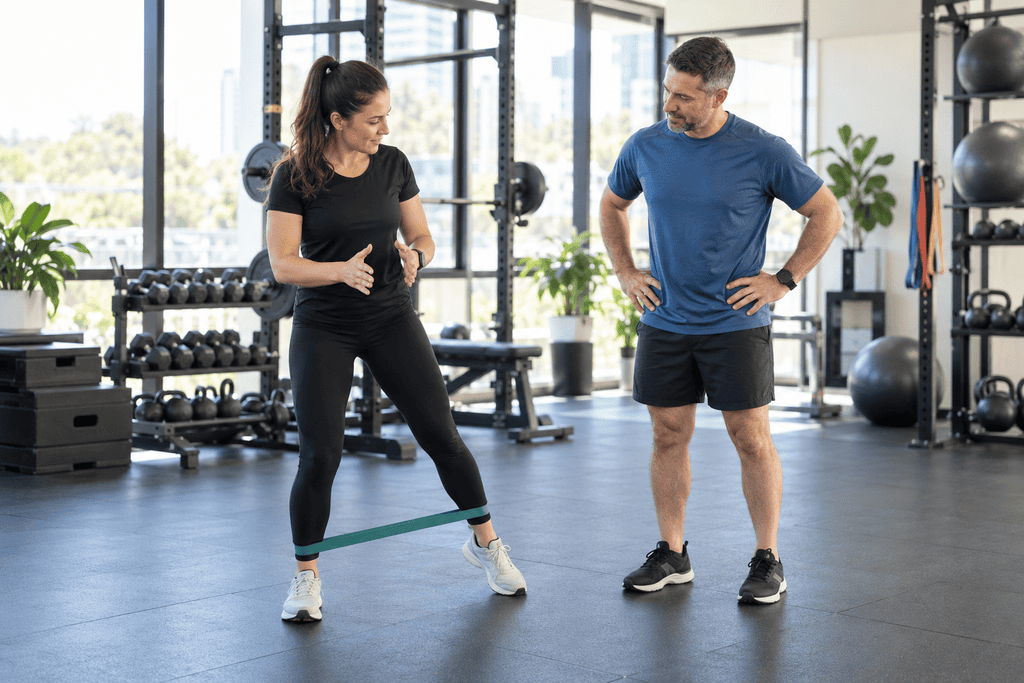
Although both professionals use exercise, the purpose and responsibilities of their work differ.
| Area | Accredited exercise physiologist | Personal trainer |
| Main focus | Clinical exercise assessment, prescription and review | General fitness instruction and exercise coaching |
| Qualifications | At least four years of relevant university study and ESSA accreditation | Commonly Certificate IV in Fitness; some hold higher qualifications |
| Reasons for attending | Exercise needs involving disability, medical conditions or injury | Fitness goals, technique, training structure and motivation |
| Assessment emphasis | Health history, physical function and clinical considerations | Fitness readiness, exercise experience and training goals |
| Settings | Homes, healthcare settings, gyms, community spaces and telehealth | Gyms, studios, homes, outdoor spaces and online |
| Professional boundaries | Clinical exercise within the practitioner’s scope | Fitness services within the trainer’s qualifications and scope |
The setting alone does not tell you which service you are receiving. An exercise physiologist may work in a gym, while a personal trainer may visit your home.
Similarly, two sessions might use comparable equipment but involve different assessment, supervision and reporting requirements. Ask who is delivering the service and what the appointment is intended to address.
Exercise physiology may be worth discussing with your healthcare team when exercise requires consideration of a disability, ongoing symptoms or a medical condition.
For example, you might need an assessment before starting a program because everyday movement is affected by fatigue, reduced mobility or a complex health history. A carer may also need guidance about their role during planned exercise sessions.
The starting point should be your circumstances, rather than a standard workout.
Useful questions include:
For children, families should also ask about age-appropriate experience, consent and how sessions will accommodate the child’s interests and communication.
New or unexplained symptoms should be discussed with an appropriate healthcare professional before beginning or substantially changing exercise.
A personal trainer may suit someone whose main priority is building a regular fitness routine, learning exercise technique or following a structured program.
For example, an adult returning to the gym after a long break may want help choosing exercises and organising weekly sessions. Someone already exercising independently might want coaching around a particular fitness goal.
Disability does not automatically exclude someone from personal training. What matters is whether the trainer has suitable skills and can work within any relevant clinical guidance.
Before booking, ask about qualifications, first aid training, insurance and experience with people whose needs resemble yours. Also consider whether the trainer listens, explains instructions clearly and respects your preferred pace.
These practical details matter when choosing someone you may work with regularly.

NDIS funding depends on the participant’s disability-related needs, their plan and the applicable funding criteria. A service is not automatically funded because it involves exercise or is delivered by a qualified professional.
The NDIS guidance on therapy supports lists exercise physiology among the therapies it may fund when the criteria are met. It also states that personal training is not funded as a therapy support.
However, the NDIS therapy supports guideline explains that an appropriately qualified personal trainer may be funded through capacity building health and wellbeing funding when the relevant criteria are satisfied. This is a separate arrangement from therapy funding.
Before starting, clarify:
Your support coordinator or plan manager can help you understand the proposed arrangements. Avoid assuming that exercise physiology and personal training can be substituted within the same budget.
Travel, accessibility and scheduling can influence whether an appointment is practical. Mobile services allow assessment and exercise sessions to take place in a suitable home or community setting.
Accelerated Allied Health offers mobile exercise physiology, with home, gym, community and telehealth options. Appointment format should be discussed according to the person’s needs and the suitability of the environment.
For families across Wyndham, Brimbank, Melton, Hume and surrounding western and north-western Melbourne areas, useful booking questions include whether the provider visits their address, what space is needed and whether travel charges apply.
A home appointment does not necessarily require a dedicated exercise room. Ask the practitioner what equipment or preparation is appropriate before purchasing anything.
Where a carer or support worker will attend, clarify their role and make sure the person receiving the service agrees to their involvement.

Yes, there may be circumstances where both professionals have a role. An exercise physiologist might provide clinical assessment and guidance, while a personal trainer provides fitness coaching within agreed boundaries.
This arrangement should be based on individual needs. With your consent, the professionals can clarify responsibilities, relevant exercise instructions and when a clinical review is required.
There is no fixed rule that everyone must progress from exercise physiology to personal training. Some people need ongoing clinical input; others may use fitness services independently. The arrangement should be reviewed as circumstances change.
When comparing an exercise physiologist with a personal trainer, start with the reason you want support. General fitness coaching and clinical exercise services have different purposes, even when the exercises look similar.
Ask about qualifications, relevant experience, appointment format and costs. For NDIS participants, confirm funding arrangements before committing to sessions.
If you are exploring exercise physiology in Melbourne’s west or north-west, visit Accelerated Allied Health to learn about available services and discuss whether a home, community or telehealth appointment suits your needs.

Monthly insights on injury prevention, recovery, and everyday movement — straight to your inbox.
© 2026 Accelerated Allied Health | All Rights Reserved | Site by Netrosa